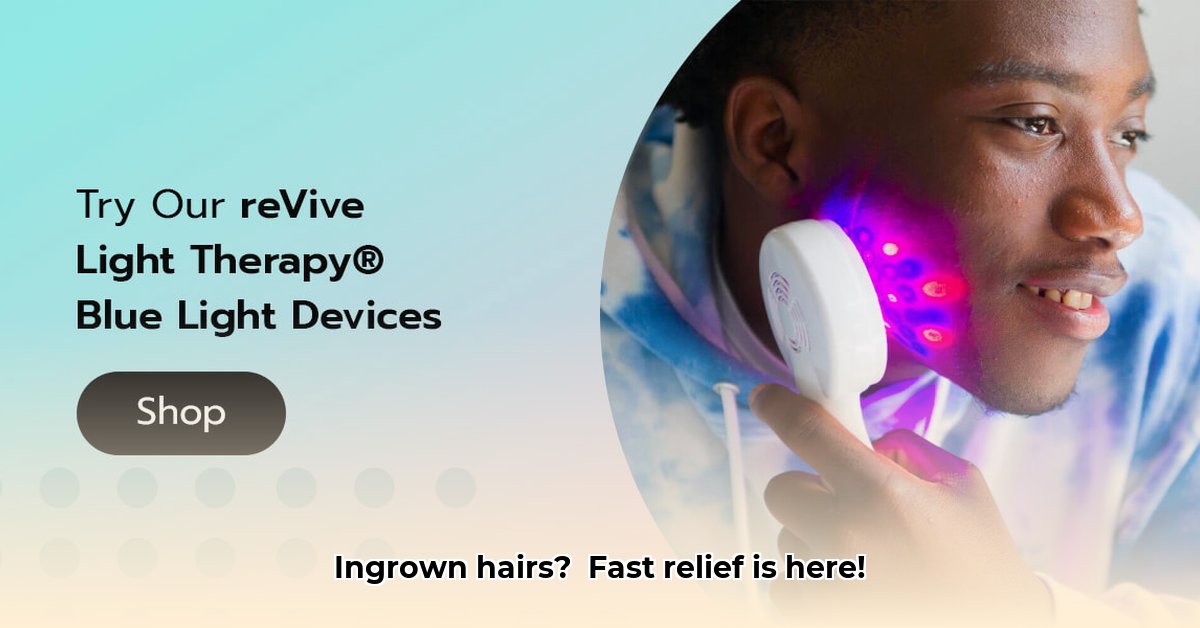
Dealing with ingrown hairs is frustrating. They're painful, unsightly, and can sometimes lead to infection. Traditional methods like tweezing or waxing can even worsen the problem. But what if there was a gentler, more effective solution? Blue light therapy, often combined with red light therapy, offers a promising non-invasive approach. This article explores its potential benefits, provides guidance on its use, and addresses the current limitations of research in this area.
Understanding Ingrown Hairs and Light Therapy
Ingrown hairs occur when a hair follicle curls back under the skin instead of growing out, often due to shaving, waxing, or other hair removal methods. The trapped hair causes inflammation, redness, and painful bumps, potentially leading to infection. Blue and red light therapies offer a potential solution. Blue light targets bacteria, reducing infection risk, while red light reduces inflammation and promotes healing.
How Blue and Red Light Therapy Works on Ingrown Hairs
Blue light therapy (BLT) possesses antibacterial properties, effectively targeting and killing bacteria commonly associated with ingrown hairs. This minimizes infection risk, a significant concern with these skin irritations. "The antimicrobial effects of blue light are well-documented," explains Dr. Anya Sharma, Dermatologist at the University of California, San Francisco. "However, more research is needed to fully understand its efficacy specifically for ingrown hairs."
Red light therapy (RLT), on the other hand, stimulates cell regeneration and reduces inflammation. It encourages faster healing and reduces redness and swelling around the ingrown hair. "Red light therapy's anti-inflammatory effects are well-established," states Dr. David Lee, a board-certified dermatologist at Stanford University. "This makes it a valuable adjunct to blue light therapy for ingrown hairs, potentially reducing healing time."
The Power of Combining Red and Blue Light
Combining RLT and BLT might offer synergistic benefits, addressing both infection and inflammation simultaneously. This dual-action approach could lead to faster healing and a reduction in scarring. However, more research is needed to determine optimal wavelength combinations, treatment durations, and frequencies for ingrown hairs. Isn't a holistic approach always better?
What the Current Research Shows
While individual studies show promise for both BLT and RLT in treating skin infections and inflammation, large-scale clinical trials specifically focusing on ingrown hairs are lacking. Existing research suggests potential, but more robust studies are crucial to establish definitive guidelines and confirm efficacy.
A Practical Guide to Using Light Therapy at Home
Important: Always consult a dermatologist before starting any at-home light therapy treatment. They'll assess your skin and advise on the appropriate approach.
Once you have your dermatologist's approval, here's a general guide:
- Cleanse: Gently cleanse the affected area with a mild cleanser and ensure it's completely dry before treatment.
- Apply the Device: Position the light therapy device as per manufacturer's instructions, ensuring the ingrown hair is directly exposed to the light.
- Treatment Time: Adhere strictly to your dermatologist’s and the manufacturer’s recommended treatment duration and frequency. Don't exceed recommended times.
- Monitor: Observe the area for any improvement or adverse reactions. Report any concerns to your dermatologist immediately.
- Consistency: Regular use is crucial for optimal results. Be patient; results may not be immediate.
Weighing the Pros and Cons
| Pros | Cons |
|---|---|
| Non-invasive and generally painless | Requires consistent use; it’s not a quick fix. |
| Addresses infection and inflammation | Limited large-scale clinical trials specifically for ingrown hairs. |
| Potentially faster healing and reduced scarring | Cost of devices can be a significant factor. |
| May help prevent future ingrown hairs | Efficacy varies depending on skin type, hair texture, and other individual factors. |
The Future of Light Therapy for Ingrown Hairs
The potential of blue and red light therapy for ingrown hairs is significant. Ongoing research is critical to establishing standardized treatment protocols and fully understanding its effectiveness. This exciting area of skincare offers a potentially gentler and more effective alternative to traditional methods for many.
Key Takeaways
- Red light therapy reduces inflammation.
- Blue light therapy combats bacteria.
- Combining both might offer superior results.
- Consult a dermatologist before starting treatment.
- More research is needed to fully establish efficacy and best practices.